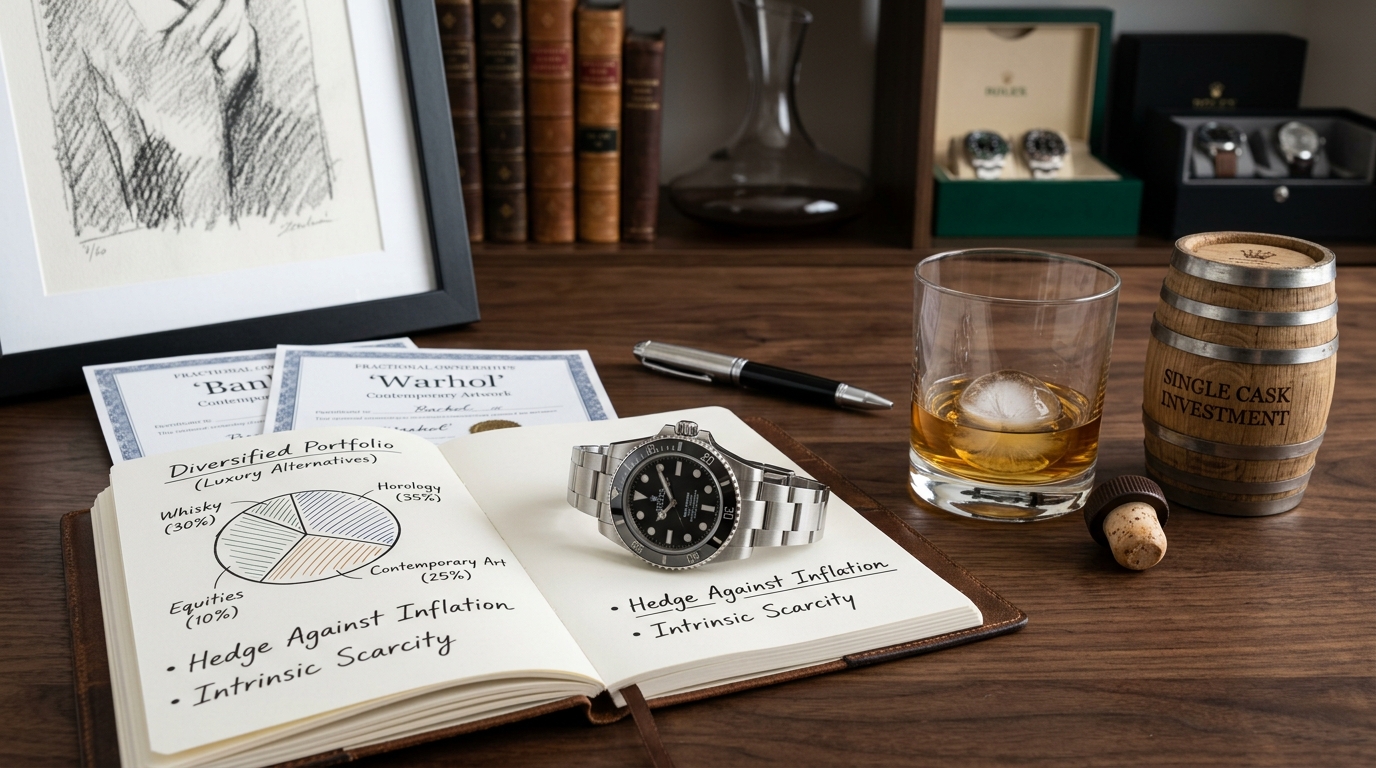
A few years ago, I found myself sitting in front of a spreadsheets-heavy portfolio review, staring at a wall of modest 7% to 9% index fund returns. It was solid, sensible, and completely uninspiring. Inflation was eating away at the margins, market volatility was keeping me up at night, and I couldn't help but feel there had to be a more tangible way to build wealth.
That was the turning point that pushed me down the rabbit hole of alternative tangible assets. I wasn't interested in meme coins or hyper-speculative digital tokens. I wanted tangible, tangible items of intense craft, scarcity, and real-world desire. Over the last five years, I’ve moved a chunk of my capital into
luxury investments—ranging from blue-chip horology to fine art fractions and ultra-rare spirits.
It hasn't all been smooth sailing (I've made my fair share of rookie missteps, which I'll share so you don't repeat them), but done right, high-yield luxury assets can diversify your wealth while outperforming traditional equity indices like the S&P 500.
Here is my ultimate, battle-tested guide to navigating the luxury asset market without getting burned.
Why Look Beyond the Stock Market?
Let’s get one thing straight: I still hold traditional equities. But relying solely on the stock market leaves you completely exposed to broader macroeconomic shocks, central bank interest rate decisions, and tech-sector corrections.
Uncorrelated Returns: A rare Rolex Daytona or a cask of Macallan doesn't drop in value just because tech stocks had a bad quarter.
Inherent Scarcity: Corporations can issue more shares. Fine wine producers cannot go back to 1982 and harvest more Bordeaux grapes.
Utility and Enjoyment: You can't wear a share of Apple stock to a networking dinner or display a Vanguard ETF on your wall.
+-------------------+--------------------------------+----------------------------------+
| Asset Class | 10-Year Average Return Target | Key Value Driver |
+-------------------+--------------------------------+----------------------------------+
| Blue-Chip Watches | 8% - 15% | Brand prestige, extreme scarcity |
| Fine Wine & Cask | 10% - 14% | Consumption reducing supply |
| Contemporary Art | 9% - 13% | Cultural momentum, artist pedigree|
+-------------------+--------------------------------+----------------------------------+
Top Luxury Assets That Outperform Stocks
1. Luxury Timepieces (Horology)
Not every luxury watch is an investment. If you walk into a standard department store and buy a fashion watch, its value drops 50% the second you leave.
True investment-grade timepieces come from the "Holy Trinity" of watchmaking—Patek Philippe, Audemars Piguet, and Vacheron Constantin—alongside Rolex and select independent masters like F.P. Journe.
The Reality Check: During the 2020–2022 market spike, watch prices surged to unsustainable heights, followed by a necessary market correction. Today, the market has stabilized, making it an excellent entry point for long-term holders focused on iconic references (like the Rolex Submariner, GMT-Master II, or Patek Philippe Nautilus).
2. Fine Wine and Rare Spirits
Fine wine and rare whiskey operate on a simple, beautiful economic principle: consumption reduces supply. Every time someone pops a cork on a 2010 Domaine de la Romanée-Conti, the total global supply of that vintage shrinks forever, while demand generally grows as the wine matures in quality.
Single Cask Whiskey: Buying entire casks of Scotch or Irish whiskey allows your asset to literally age into higher value tiers inside the barrel.
Bordeaux & Burgundy: Investment-grade wines consistently show low volatility compared to equities, acting as a massive hedge during inflationary periods.
3. Contemporary & Blue-Chip Art
Art used to be reserved exclusively for ultra-high-net-worth individuals who could drop $5 million at a Sotheby's auction. Today, the market has democratized. Contemporary art by recognized names (like Banksy, Andy Warhol, or Jean-Michel Basquiat) has outpaced the S&P 500 over several multi-year stretches, driven by global wealth expansion.
How to Get Started: Step-by-Step
If you're ready to deploy capital into luxury assets, here is the exact process I follow when evaluating any potential acquisition.
Step 1: Set Your Capital Allocation Limit
Never put your rent money or primary emergency fund into alternative investments. I recommend allocating 10% to 20% of your total liquid portfolio into luxury alternative assets. Treat this as long-term, illiquid wealth preservation.
Step 2: Choose Your Sourcing Medium
Where you buy matters just as much as what you buy.
For Watches: Use platforms with physical verification services like Chrono24 (utilizing their escrow service), eBay’s Authenticity Guarantee, or trusted grey-market dealers like WatchBox/1916 Company.
For Wine & Spirits: Look into platforms like Cult Wine Investment or WineCap. For whisky casks, work with accredited brokerages like Braeburn Whisky.
For Fractional Art: If you don't have $500,000 liquid, platforms like Masterworks allow you to buy securitized shares in blue-chip artwork certified by the SEC.
Step 3: Secure Physical Storage & Insurance
Physical assets require physical care.
Timepieces: Invest in a fireproof, rated home safe or a secure deposit box.
Wine: Must be stored in climate-controlled bonded warehouses (temperature around 12–14°C with 70% humidity). Storing bonded wine also defers import duties and taxes in many jurisdictions until it is withdrawn.
Insurance: Standard homeowners insurance rarely covers high-value luxury items. Look into specialized inland marine policies or dedicated asset insurers like Wax Insurance or Hodinkee Insurance for watches.
Expensive Lessons: Mistakes I’ve Made (So You Don't Have To)
Mistake 1: Falling for "Hype" Brands
Early on, I bought a limited-edition collaboration watch from a boutique brand, convinced it would skyrocket. Six months later, the trend faded, liquidity vanished, and I ended up selling it at a 25% loss.
Lesson: Stick to heritage, proven demand, and liquid models before speculating on micro-trends.
Mistake 2: Ignoring Maintenance and Holding Costs
I once overlooked the service history of a vintage mechanical chronograph. When I brought it to a watchmaker, the service bill for original replacement parts ate up two years' worth of projected appreciation.
Lesson: Factor insurance, storage fees, maintenance, and auction seller fees directly into your ROI calculations from day one.
Mistake 3: Buying Items in Poor Condition
In the luxury world, condition is everything. A pristine box-and-papers watch can command a 30% to 50% premium over an identical "naked" watch with polished-down case edges. Never sacrifice condition just to get a "cheap" entry price.
The Golden Rules of Luxury Investing
Passion First, Profit Second: Only buy things you genuinely appreciate. If the market stagnates for three years, you should still feel proud to own the asset.
Verify Provenance Aggressively: In the high-end market, counterfeits and franken-watches are sophisticated. Always demand original papers, service records, certificates of authenticity, and receipts.
Think in Decades, Not Months: Luxury assets are illiquid. You cannot instantly sell a vintage Patek Philippe at full market value with the click of a button like you can an Apple stock share. Plan to hold for 5 to 10 years minimum.
Building wealth shouldn't feel like a sterile exercise in staring at digital ticker symbols all day. Blending traditional index investing with tangible, high-yield luxury assets has not only protected my capital against market downturns—it’s made the process of building wealth infinitely more engaging.